Showing posts with label reviews. Show all posts
Showing posts with label reviews. Show all posts
02 December 2011
New Girl's Jess: The Best New Female Character on Television
I didn't want to like it. I watched the pilot with a degree of negative prejudgment usually reserved for a Lars von Trier film, and that episode of New Girl really didn't do much to assuage my predisposition. Zooey Deschanel played a twee TV character appropriating tropes from both the stereotypical television female (post-breakup she sobs all day while repeatedly watching Dirty Dancing) and the unconventional kind of woman I relate to (her idea of flirting is lifting her glasses up while hooting "hubba hubba"), which just made me angry. I'd rather have her be a two-dimensional "girlfriend" character than one adopting some more relatable attributes, but in a way that feels tacked on and inorganic. This happened with Deschanel's character in (500) Days of Summer—as Lindy West puts it: "(500) Days of Summer feels like it was written by a bunch of marketing executives who just took a class on indie quirkiness at the Learning Annex." Ugh. I did not want to enjoy this show. But the other castmembers were funny enough, so I watched another episode, and… I've found myself starting to get excited for it to be Tuesday just for the evening's New Girl.
Yes, Jess has a "quirky" TV/movie-job (elementary school teacher), an expansive wardrobe no one could afford on that salary (sponsored by Cotton), and looks like Zooey Deschanel, but she also obnoxiously sings at inappropriate moments, laughs at her own corny jokes, and is very uncomfortable with expressing herself sexually. Jess is far too flawed to be a male fantasy, and has too many interests outside of relations with men to be grouped with other "adorkable" characters Zooey Deschanel has played. Instead, she is a Manic Pixie Dream Girl for awkward women; the pinnacle of what they could be with their off-putting personalities still intact, like an "everywoman" Liz Lemon lacking that unpopular girl dream-job that makes her somehow a less attainable female fantasy. Obviously there is still the appearance factor—Tina Fey and Zooey Deschanel have magazine-cover good looks—which could be even more detrimental for unpopular women than the MPDG: "If men are even turned off by Zooey Deschanel when she acts like that, then no one is going to like me!" However, I find this to make all the more empowering the times when Jess succeeds in the dating realm: "He obviously does not just like her for her looks! There is hope for me after all!"
Erik Adams of The AV Club recently did not at all enjoy a New Girl episode I quite fancied, "CeCe Crashes." Adams took umbrage with how New Girl has begun to introduce something of a "will they/won't they" between Jess and one of her three male roommates, Nick (Jake M. Johnson). Yes, this is an irritating television trope, but as Adams writes, "a show about platonic friends just doesn't have enough sizzle for modern television." New Girl is in no way something that I expect to be "groundbreaking television," eschewing the regular plot devices that assure viewership, so as Unresolved Sexual Tension has become inevitable in the sitcom universe, how this is introduced is what is important. And episode writer Rachel Axler (who also worked on Parks and Rec) has done so in a brilliantly awkward girl manner.
Jess does not pick up on anything but friendship between her and Nick until her friend CeCe stays for a few days, and hints that she thinks he's interested. The beginning of the episode parallels this later conversation—Jess (pyjama-clad) rescues a drunken CeCe from a club; as they walk to Jess's car, some men catcall CeCe, who giggles, "Jess, I think these guys are into you." Jess shrugs it off. This is furthered in a flashback in which a high school Jess cannot accept the advances of her classmate Eduardo, assuming he must mean to hit on CeCe. Jess does not perceive herself as a sexual object desirable to men. She does not pick up on any possibility with Nick until CeCe uses her tricky "mind games." Adams critiques CeCe as "less a character and more a dispenser of the worst romantic-comedy tropes," but I would say more that CeCe is the connection Jess has to the sitcom world in which she inhabits. "You can't be friends with guys," CeCe asserts. "No, you just think that everyone wants to sleep with everyone all the time," Jess retorts. Jess is an original character in that she does not understand the "sitcom logic" which governs most primetime romantic relationships, yet the show itself is not novel enough to do away with a reliance on that underlying structure, and so hence: CeCe as the introducer of this unavoidable UST.
This episode does have its flaws, with other roommates Schmidt and Winston regressing to douchey stereotypes in a clichéd competition to "get with" CeCe, but New Girl especially knows how to use Max Greenberg humorously in this context. (The best—Ben Kingsley is one of Schmidt's favourite things about India; Greenberg's reading of the word "chutney.") And this plot gave us Schmidt telling Jess on the roof, "I guess I'll always just be the fat kid with the big dreams." New Girl presents a somewhat hopeful, sitcom-realistic version of the future for those fat girls and boys. They won't be CeCe or her male counterparts, but they could be Jess or Schmidt. Also the way in which the budding romantic tension between Jess and Nick plays out resonated with the awkward romantic in me without feeling contrived. Jess's dream man: "Walter Matthau in Grumpy Old Men and I could be Girl Jack Lemmon." (She later lambastes Nick – "Why do you have to wear old man clothes all the time?!") She assesses Nick's potential attraction to her by checking in what direction his feet point, a technique seemingly developed by a gawky middle schooler. Their storyline concludes with Jess apologizing for being weird, and then them just silently brushing their teeth, side-by-side. This is a wonderful, quiet little moment, reminiscent of my favourite scene from Let the Right One In.
"I like moving slow," Jess tells CeCe. "I like being weird and taking my time. I'm not like you. I don't just jump into the potato sack with the first potato that I meet with diabetes." And thus I propose that Jess is the best new thing to happen to female characters on primetime television this season. Sure, we have Leslie Knope and April Ludgate*, but until Liz Lemon gets back on the air, it's really refreshing to have a lady character lacking complete self-confidence in terms of her sexual desirability. So yes, New Girl falls prey to classic sitcom UST, but Jess does not respond like other characters on TV right now. And thank god for that.
*Happy Endings is an interesting case in how terrible Jane has proved to be at flirting, but she is happily married, and the single characters appear to have no difficulty whatsoever in acquiring new bedfellows. And don't even mention Whitney or Two Broke Girls.

20 August 2011
Beetlejuice (Tim Burton, 1988) - Too Much of Too Many Good Things
I saw Beetlejuice once when I was about ten years old. Coupled with a few remembered wisps of plot threads from the short-lived animated series (something about a mall parking lot, another thing about Girl Scout cookies), all that I really remembered about it was the scene where they dance to the song from the Bon Marche commercials. Only recently, while IMDB-ing Alec Baldwin did I even realize he was in the movie.
The only scene I could recall
So it seems kind of ironic that Betelgeuse, titular star of the film and my memories, hardly features into this movie's story at all. The film really focuses on Adam and Barbara Maitland (Alec Baldwin and Geena Davis), recently deceased newlyweds, and their struggles to acclimate to the world of the dead, and to exorcise the big city Deetz family (Catherine O'Hara, Jeffrey Jones, and Winona Ryder) from their home. That realization of the afterlife is where Beetlejuice really succeeds, envisioning the world of the dead as a nightmarish bureaucracy, replete with dense rule books, interminable queues, and unhelpful caseworkers—like one hellish trip to the DMV. The late 80s claymation, model, and wire effects add a level of "realism" to this environment that CGI just can't (see: Casper); I want to stay in this movie, with these quaint ghosts who make miniature towns and have the same taste in clothing, furniture, and wallpaper as me forever. However, once the character Betelgeuse is added, everything gets a bit muddled.
Post-mortem Betelgeuse, as a "freelance bio-exorcist," is the answer the Maitland's think they need to have a peaceful, Deetz-free afterlife. They summon him, but he creeps them out, so they send him back, then he comes again, and etc. etc. The Betelgeuse plotline drags on for three quarters of the movie, ostensibly building tension but really just staying stagnant: the Maitland's think this Betelgeuse guy can help him, but it ends up he's bad news. Okay, we've got it. Let's get back to cutting some of that blood-red tape. But as Betelgeuse is posited as the antagonist, the film can't really go anywhere without him. Suddenly, in the third act, he wreaks havoc—abruptly forcing young Lydia Deetz to marry him (some regulation that was never previously mentioned), shooting some of Charles Deetz' wealthy business prospects through the ceiling, and yet all that is needed to stop him is someone to utter his name three times, which the characters seem to find impossibly hard. These conflicts feel intensely manufactured, for as soon as Betelgeuse leaves, the Maitlands and Deetzes find a way to cohabitate in harmony. Michael Keaton's energetic, hilarious performance distracts from this central plotting issue, but Betelgeuse, ironically enough, feels like he belongs in another movie. There is enough of a story with the Maitlands adjusting to the administration of the afterlife and their artsy new housemates, and the Betelgeuse-related plotlines trap this movie in a dramatic purgatory from which a crazy third act cannot wholly let it escape.
I love all the ideas that went into this movie: poltergeist caseworkers, ghosts cutting holes in sheets, sandworms, a bio-exorcist—but there are just a few too many floating around to make a truly great film.
The only scene I could recall
So it seems kind of ironic that Betelgeuse, titular star of the film and my memories, hardly features into this movie's story at all. The film really focuses on Adam and Barbara Maitland (Alec Baldwin and Geena Davis), recently deceased newlyweds, and their struggles to acclimate to the world of the dead, and to exorcise the big city Deetz family (Catherine O'Hara, Jeffrey Jones, and Winona Ryder) from their home. That realization of the afterlife is where Beetlejuice really succeeds, envisioning the world of the dead as a nightmarish bureaucracy, replete with dense rule books, interminable queues, and unhelpful caseworkers—like one hellish trip to the DMV. The late 80s claymation, model, and wire effects add a level of "realism" to this environment that CGI just can't (see: Casper); I want to stay in this movie, with these quaint ghosts who make miniature towns and have the same taste in clothing, furniture, and wallpaper as me forever. However, once the character Betelgeuse is added, everything gets a bit muddled.
Post-mortem Betelgeuse, as a "freelance bio-exorcist," is the answer the Maitland's think they need to have a peaceful, Deetz-free afterlife. They summon him, but he creeps them out, so they send him back, then he comes again, and etc. etc. The Betelgeuse plotline drags on for three quarters of the movie, ostensibly building tension but really just staying stagnant: the Maitland's think this Betelgeuse guy can help him, but it ends up he's bad news. Okay, we've got it. Let's get back to cutting some of that blood-red tape. But as Betelgeuse is posited as the antagonist, the film can't really go anywhere without him. Suddenly, in the third act, he wreaks havoc—abruptly forcing young Lydia Deetz to marry him (some regulation that was never previously mentioned), shooting some of Charles Deetz' wealthy business prospects through the ceiling, and yet all that is needed to stop him is someone to utter his name three times, which the characters seem to find impossibly hard. These conflicts feel intensely manufactured, for as soon as Betelgeuse leaves, the Maitlands and Deetzes find a way to cohabitate in harmony. Michael Keaton's energetic, hilarious performance distracts from this central plotting issue, but Betelgeuse, ironically enough, feels like he belongs in another movie. There is enough of a story with the Maitlands adjusting to the administration of the afterlife and their artsy new housemates, and the Betelgeuse-related plotlines trap this movie in a dramatic purgatory from which a crazy third act cannot wholly let it escape.
I love all the ideas that went into this movie: poltergeist caseworkers, ghosts cutting holes in sheets, sandworms, a bio-exorcist—but there are just a few too many floating around to make a truly great film.
22 June 2011
STEVE COOGAN: THE MAN WHO THINKS HE'S IT (1998) - Nothing New Here
Like Steve Coogan's previous live video, Live 'n' Lewd, The Man Who Thinks He's It shies away from Coogan's earlier impression-based stand-up, and instead showcases a number of comic characters: smutty shop girl Pauline Calf; nervous comedian Duncan Thickett; Portuguese pop sensation Tony Ferrino; unemployable drunkard Paul Calf; blunt, oblivious chat show host Alan Partridge; and the self-absorbed comedian Steve Coogan.
At the beginning of The Man, in one of its many faux-interviews with Steve Coogan in pretentious actor mode, Coogan vows that this show will be "different from all those other live videos." This promise is somewhat upheld, but at a loss for the viewers at home.
Coogan the Actor
By 1998, Coogan's The Man characters were all fairly well-established, having had their own series, shorts, or at least previous video appearances. For Alan Partridge, this meant having a well-known catchphrase and the expectation that he would get down to some chat, but for the other characters as well, a formula seemed to have developed for their stage performances. Pauline Calf, as she did in Live 'n' Lewd, crassly discusses her wanton lifestyle, and then reads an excerpt from her newest book. Duncan Thickett botches his attempts at the latest fads in comedy (including some meta "character comedy"). Tony Ferrino deplores matrimony, and then sings some songs winking at infidelity. Paul Calf drunkenly mumbles about unemployment and females. Alan Partridge has a chat and then sings a "medley" from a female vocalist's oeuvre (this time Kate Bush). This is quite a variety of very different performances, but for anyone familiar with Coogan's work, it's no surprise. A first-time viewer might giggle at the fact that crude Pauline Calf has written a book; a Coogan aficionado is just waiting to hear the name of her newest Mary-Sue character. Someone unfamiliar with Thickett might cackle at the fact that someone so out-of-touch is even attempting to do observational comedy; the well-versed viewer just wants to see what embarrassing bit of personal information he will give away in his attempts to relate with the audience. The characters themselves – much like Tony Ferrino's song selection – have become variations on a theme. Who will Paul Calf insult? Who will Alan Partridge awkwardly interview? These are humorous routines, but for a Coogan enthusiast, they are comfortable comedy, as comfy and familiar as sports casual clothing; nothing new or exciting here.
In order to fulfill that above-mentioned promise to be unlike other live shows, The Man Who Thinks He's It features many cut-aways to "Steve the Comedian," as well as bits with his fellow performers Julia Davis and Simon Pegg. The inclusion of co-performers is a key change from Live 'n' Lewd, and The Man depends heavily on them for its laughs. Julia Davis plays Pauline Calf's homely best friend, Tony Ferrino's soon-to-be-late wife, a feminist singer Paul Calf mistakenly invites to play a song, Alan Partridge's depressed, bulimic guest, and herself. Though Julia Davis is always a funny presence, rather than refresh Coogan's characters with some on-stage banter, her roles seem to just interrupt the sketches, and then drag them on without many actual jokes written for this interaction. With Paul Calf, Julia Davis performs a quintessential man-hating tune, and Paul just lazily dances around in the background. With these other characters to rely on, the center of the show – Coogan's creations – seem underwritten. The aforementioned same-old formula is used with a new friend in lieu of new jokes.
In their interview interstitials, Davis and Pegg paint a portrait of Coogan as a very self-obsessed, but desperate man. In one moment, overhearing Simon receiving big laughs while emceeing, Steve asks Simon not to tell that joke next time. This is a humorous poke at the egotism that comes with success, but it is also the only time we get to see Pegg in his emceeing role, unlike John Thomson as Bernard Righton in Live 'n' Lewd. With these frequent cutaways to documentary segments, once even interrupting Tony Ferrino mid-song, The Man Who Thinks He's It definitely does not feel like any other live show: it doesn't feel like a live show at all. The lampooning of the Comic Steve Coogan has become one of Coogan's funniest devices (in The Trip, Cock & Bull, Coffee & Cigarettes, etc.), but here, it's used almost too much. Like the addition of co-performers, the frequency of these documentary interstitials stops seeming refreshing and new, and starts to feel like a crutch to distract from an otherwise lackluster bill of performances.
In The Man Who Thinks He's It, Coogan is of course funny, but his characters (including "Steve Coogan" himself) have all had more hilarious, fresh, and enthusiastic performances. The Man showcases consistent, comfortable comedy, but you'll find nothing brilliant here.
At the beginning of The Man, in one of its many faux-interviews with Steve Coogan in pretentious actor mode, Coogan vows that this show will be "different from all those other live videos." This promise is somewhat upheld, but at a loss for the viewers at home.
Coogan the Actor
By 1998, Coogan's The Man characters were all fairly well-established, having had their own series, shorts, or at least previous video appearances. For Alan Partridge, this meant having a well-known catchphrase and the expectation that he would get down to some chat, but for the other characters as well, a formula seemed to have developed for their stage performances. Pauline Calf, as she did in Live 'n' Lewd, crassly discusses her wanton lifestyle, and then reads an excerpt from her newest book. Duncan Thickett botches his attempts at the latest fads in comedy (including some meta "character comedy"). Tony Ferrino deplores matrimony, and then sings some songs winking at infidelity. Paul Calf drunkenly mumbles about unemployment and females. Alan Partridge has a chat and then sings a "medley" from a female vocalist's oeuvre (this time Kate Bush). This is quite a variety of very different performances, but for anyone familiar with Coogan's work, it's no surprise. A first-time viewer might giggle at the fact that crude Pauline Calf has written a book; a Coogan aficionado is just waiting to hear the name of her newest Mary-Sue character. Someone unfamiliar with Thickett might cackle at the fact that someone so out-of-touch is even attempting to do observational comedy; the well-versed viewer just wants to see what embarrassing bit of personal information he will give away in his attempts to relate with the audience. The characters themselves – much like Tony Ferrino's song selection – have become variations on a theme. Who will Paul Calf insult? Who will Alan Partridge awkwardly interview? These are humorous routines, but for a Coogan enthusiast, they are comfortable comedy, as comfy and familiar as sports casual clothing; nothing new or exciting here.
In order to fulfill that above-mentioned promise to be unlike other live shows, The Man Who Thinks He's It features many cut-aways to "Steve the Comedian," as well as bits with his fellow performers Julia Davis and Simon Pegg. The inclusion of co-performers is a key change from Live 'n' Lewd, and The Man depends heavily on them for its laughs. Julia Davis plays Pauline Calf's homely best friend, Tony Ferrino's soon-to-be-late wife, a feminist singer Paul Calf mistakenly invites to play a song, Alan Partridge's depressed, bulimic guest, and herself. Though Julia Davis is always a funny presence, rather than refresh Coogan's characters with some on-stage banter, her roles seem to just interrupt the sketches, and then drag them on without many actual jokes written for this interaction. With Paul Calf, Julia Davis performs a quintessential man-hating tune, and Paul just lazily dances around in the background. With these other characters to rely on, the center of the show – Coogan's creations – seem underwritten. The aforementioned same-old formula is used with a new friend in lieu of new jokes.
In their interview interstitials, Davis and Pegg paint a portrait of Coogan as a very self-obsessed, but desperate man. In one moment, overhearing Simon receiving big laughs while emceeing, Steve asks Simon not to tell that joke next time. This is a humorous poke at the egotism that comes with success, but it is also the only time we get to see Pegg in his emceeing role, unlike John Thomson as Bernard Righton in Live 'n' Lewd. With these frequent cutaways to documentary segments, once even interrupting Tony Ferrino mid-song, The Man Who Thinks He's It definitely does not feel like any other live show: it doesn't feel like a live show at all. The lampooning of the Comic Steve Coogan has become one of Coogan's funniest devices (in The Trip, Cock & Bull, Coffee & Cigarettes, etc.), but here, it's used almost too much. Like the addition of co-performers, the frequency of these documentary interstitials stops seeming refreshing and new, and starts to feel like a crutch to distract from an otherwise lackluster bill of performances.
In The Man Who Thinks He's It, Coogan is of course funny, but his characters (including "Steve Coogan" himself) have all had more hilarious, fresh, and enthusiastic performances. The Man showcases consistent, comfortable comedy, but you'll find nothing brilliant here.
20 June 2011
I'm Alan Partridge - Sidetracked by a Need for Laughs
In On the Hour and The Day Today, the character of Alan Partridge is introduced as a bumbling, easily exasperated sports reporter. The audience gets a more focused look at him with his "failed" chat show Knowing Me, Knowing You... with Alan Partridge, but the character does not really come into his own until the sitcom I'm Alan Partridge.

Sometimes mistakenly labeled as a mockumentary, I'm Alan Partridge is immediately removed from that label by its use of a laugh-track. In KMKYWAP, the audience sits in the same studio as Alan's, and he often reacts to their laughter as though to heckling. With IAP, the handheld camerawork does somewhat mimic that of a documentary, but that non-diegetic tittering causes a riff in the realism of the show, as Coogan and other cast members time delivery in accordance with the track. Partridge is thus occasionally portrayed as a bit more of a "doof" than he might have been otherwise, in his "hamming it up" like other sitcom characters.
In the first series of IAP, though the laughtrack is a bit jarring, there is still a melancholy to Alan Partridge. Episode to episode, Alan acts like a buffoon in different and varied ways, but the series is connected by an emotional motif – by Alan's fear of failure, specifically in terms of his chat show's renewal. This is represented visually by a recurring dream sequence, depicting Alan gyrating in a strip club for the BBC's Tony Hayers and other television executives. Alan will often act like a fool to try to avoid this nightmare, but as the other characters (particularly Sophie and Ben of the Linton Travel Tavern) know how outlandish Alan is acting, the realism is reaffirmed. Realism is not a necessity for a comedy show, but as Alan Partridge was initially conceived as a lampoon of a particular type of media personality, it is important for him to be grounded in reality. Thus, the world is not wacky, but a desperate Alan Partridge is. This is particularly revealed when, so determined to please some Irish television executives, Alan shows them to the house of a random fan in lieu of his own, and that aficionado ends up being an obsessive stalker. In IAP, however, even this "crazy" fan pales in comparison to Partridge's reactions to him.
The first series meanders in terms of quality, with the best episodes directly connected to Partridge's terror of being unsuccessful, and the worst wandering from this theme with empty and thus pointless jokes. (In "Basic Alan," a bored Alan makes for a bored audience.) The last episode brings the series to a nice close, with Alan so desperate for his career not to die, that he uses a dead man's hand to sign a contract. The cackling audience does not know whether Alan will succeed, but they do know how low he will stoop to ensure it.
In the second series of IAP, filmed five years after the first (2002), Alan is immediately brought back to his "roots" in the premiere, by giving a talk at his childhood school. But these are roots the viewers know nothing about, having never been established in the first series or before. Likewise, this episode is largely about exposition – Alan's career got somehow even worse, he had a breakdown, and he got fat — all sort of "funny" things that would leave a man as fragile as Alan shattered. Instead, Alan, having "bounced back," careens around, acting doofy as ever. Yet unlike the first series, in which almost every character seems to act as a rational foil to Alan's out of touch personality, a parade of guest stars enter into the world of IAP, each seemingly trying to outdo Alan with their wackiness. There is Alan's young Ukranian girlfriend Sonja (Amelia Bullmore), who in her broken English constantly plays practical jokes that even Alan knows are shamefully unfunny. There is Stephen Mangan as Dan, a seeming younger incarnate of Partridge's personality. Yet no longer is it crazy enough just that there exists another human being with Alan's god-awful disposition, and Alan ends up the saner one of the pair, as Dan is into orgies and "sex festivals." The undercurrent of melancholy in first series is replaced by a more "tragic" back-story, and "front"-stories obsessed with Alan not just embarrassing himself, but everyone else embarrassing themselves as well.
(Also, the former Linton staff-member Michael, someone whom Alan never previously seemed to like or be able to understand, is elevated to the spot of Alan's best friend.)
In the last episode of the second series, as Alan's book is pulped and officially regarded as a flop, the tragedy mentioned in the premiere is finally dealt with. As Alan is confronted with failure once again, he has a series of flash backs to his "Fat Alan" stage. He is invited onto a Christian radio show, and in an attempt to not look like the biggest dud there, he insults the other guest in increasingly rude ways. Yet instead of responding with some bigger, hammier reaction, the guest stops Alan like a rational human being would, and leaves. After five episodes of sit-com zaniness, a sense of realism is finally restored. There are many quotable lines in the second series, but had it maintained this more subdued approach, perhaps with a running motif of those flashbacks, it could have been a success beyond its punchlines.
Very funny series two scene... but this incident never comes up again, nor connects to anything.
The Christian radio host remarks on Alan's book ending every anecdote with the phrase "Needless to say, I had the last laugh." IAP's second series suffers from this obsession as well. In order for IAP to be not only funny but compelling, the characters do not need to try to outdo each other with their crazy hijincks and clever quips. The goofy, but more subtle Alan Partridge of The Day Today and Knowing Me, Knowing You can already bring laughs just with his exasperation. But IAP's second series, so desperate to make the audience snicker, largely dismisses realism and in doing so, reduces much character quality and consistency. And in a way, Partridge's fear of failure does come true.
Sometimes mistakenly labeled as a mockumentary, I'm Alan Partridge is immediately removed from that label by its use of a laugh-track. In KMKYWAP, the audience sits in the same studio as Alan's, and he often reacts to their laughter as though to heckling. With IAP, the handheld camerawork does somewhat mimic that of a documentary, but that non-diegetic tittering causes a riff in the realism of the show, as Coogan and other cast members time delivery in accordance with the track. Partridge is thus occasionally portrayed as a bit more of a "doof" than he might have been otherwise, in his "hamming it up" like other sitcom characters.
In the first series of IAP, though the laughtrack is a bit jarring, there is still a melancholy to Alan Partridge. Episode to episode, Alan acts like a buffoon in different and varied ways, but the series is connected by an emotional motif – by Alan's fear of failure, specifically in terms of his chat show's renewal. This is represented visually by a recurring dream sequence, depicting Alan gyrating in a strip club for the BBC's Tony Hayers and other television executives. Alan will often act like a fool to try to avoid this nightmare, but as the other characters (particularly Sophie and Ben of the Linton Travel Tavern) know how outlandish Alan is acting, the realism is reaffirmed. Realism is not a necessity for a comedy show, but as Alan Partridge was initially conceived as a lampoon of a particular type of media personality, it is important for him to be grounded in reality. Thus, the world is not wacky, but a desperate Alan Partridge is. This is particularly revealed when, so determined to please some Irish television executives, Alan shows them to the house of a random fan in lieu of his own, and that aficionado ends up being an obsessive stalker. In IAP, however, even this "crazy" fan pales in comparison to Partridge's reactions to him.
The first series meanders in terms of quality, with the best episodes directly connected to Partridge's terror of being unsuccessful, and the worst wandering from this theme with empty and thus pointless jokes. (In "Basic Alan," a bored Alan makes for a bored audience.) The last episode brings the series to a nice close, with Alan so desperate for his career not to die, that he uses a dead man's hand to sign a contract. The cackling audience does not know whether Alan will succeed, but they do know how low he will stoop to ensure it.
In the second series of IAP, filmed five years after the first (2002), Alan is immediately brought back to his "roots" in the premiere, by giving a talk at his childhood school. But these are roots the viewers know nothing about, having never been established in the first series or before. Likewise, this episode is largely about exposition – Alan's career got somehow even worse, he had a breakdown, and he got fat — all sort of "funny" things that would leave a man as fragile as Alan shattered. Instead, Alan, having "bounced back," careens around, acting doofy as ever. Yet unlike the first series, in which almost every character seems to act as a rational foil to Alan's out of touch personality, a parade of guest stars enter into the world of IAP, each seemingly trying to outdo Alan with their wackiness. There is Alan's young Ukranian girlfriend Sonja (Amelia Bullmore), who in her broken English constantly plays practical jokes that even Alan knows are shamefully unfunny. There is Stephen Mangan as Dan, a seeming younger incarnate of Partridge's personality. Yet no longer is it crazy enough just that there exists another human being with Alan's god-awful disposition, and Alan ends up the saner one of the pair, as Dan is into orgies and "sex festivals." The undercurrent of melancholy in first series is replaced by a more "tragic" back-story, and "front"-stories obsessed with Alan not just embarrassing himself, but everyone else embarrassing themselves as well.
(Also, the former Linton staff-member Michael, someone whom Alan never previously seemed to like or be able to understand, is elevated to the spot of Alan's best friend.)
In the last episode of the second series, as Alan's book is pulped and officially regarded as a flop, the tragedy mentioned in the premiere is finally dealt with. As Alan is confronted with failure once again, he has a series of flash backs to his "Fat Alan" stage. He is invited onto a Christian radio show, and in an attempt to not look like the biggest dud there, he insults the other guest in increasingly rude ways. Yet instead of responding with some bigger, hammier reaction, the guest stops Alan like a rational human being would, and leaves. After five episodes of sit-com zaniness, a sense of realism is finally restored. There are many quotable lines in the second series, but had it maintained this more subdued approach, perhaps with a running motif of those flashbacks, it could have been a success beyond its punchlines.
Very funny series two scene... but this incident never comes up again, nor connects to anything.
The Christian radio host remarks on Alan's book ending every anecdote with the phrase "Needless to say, I had the last laugh." IAP's second series suffers from this obsession as well. In order for IAP to be not only funny but compelling, the characters do not need to try to outdo each other with their crazy hijincks and clever quips. The goofy, but more subtle Alan Partridge of The Day Today and Knowing Me, Knowing You can already bring laughs just with his exasperation. But IAP's second series, so desperate to make the audience snicker, largely dismisses realism and in doing so, reduces much character quality and consistency. And in a way, Partridge's fear of failure does come true.
17 June 2011
STEVE COOGAN: LIVE 'N' LEWD (1994) - Still Holds Up
In this 1994 live special, Coogan plays four of his characters (some less well-known than others): openly-polysexual townie Pauline Calf, nervous stand-up comedian Duncan Thickett, no-nonsense health and safety lecturer Ernest Moss, and the eternally-intoxicated wastrel Paul Calf.
Paul Calf's ratings certification at the beginning of the video.
A lot of the humour in these characters comes from knowing that in real life, Steve Coogan is a charming, handsome, funny man, yet he's dedicated himself to playing such unappealing roles. (Steve Coogan the Comedian is poked at with little "documentary" interstitials that bookend the show and fill the intermission.) Though all inherently depressing, there is a delicious variety to Coogan's comic creations, and whatever they lack in funny, they make up for in pure enthusiasm. With Pauline Calf, even if her slaggy "I've done him" mantra gets a bit trite, one cannot help but marvel at how convincing a woman Coogan makes — he's not pantomiming in drag; he's really transformed himself into a character who happens to be a lady. With awkward stand-up comedian Duncan Thickett, Coogan has perfected the "anti-performance": Thickett jumps about anxiously and constantly moves his hands, trying to compensate for his nervousness with an overzealous performance; he is a stage character totally not at ease with being on stage. Many of Thickett's laughs come from this Coogan / character juxtaposition: we know (even just from the Pauline Calf routine) that Coogan is a master of voices and jokes, yet Thickett is a terrible comedian, and a terrible impressionist. Occasionally Coogan allows Thickett an accurate impersonation, hilarious in that Duncan seems less realistic than his Neil Kinnock imitation. If ever a slow spot in these sketches, there's always comedy in trying to see Steve Coogan underneath his Ernest Moss glasses or Paul Calf haircut, yet the material itself is consistently hilarious.
The characters are each introduced by John Thomson as Bernard Righton, a surprisingly entertaining (yet staunchly politically correct) emcee. The video also contains the aforementioned "documentary" bits with Coogan as Coogan, as well as faux-interviews with audience and critics (Coogan and Thomson), and some pseudo-pedantic narration by Coogan as Terry Wogan. These interstitials make the video (which lacks but needs no narrative) feel interconnected and whole, like one linked comedy piece instead of the mishmash of disparate characters that it easily could have been.
For an early venture in Coogan's career, Live 'n' Lewd holds up very well, unlike Coogan's earliest, impression-based stand-up, which can now really only be viewed as the raw, cringe-worthy beginnings from which his later work ascended. Yes, his characters still invite comparison with Coogan the comic (then and now), but that was intentional at the time; someone with no external knowledge is provided a Coogan persona with which to juxtapose his roles. For an early piece with jokes that sometimes falter, that sort of self-awareness/-containment really gives a timeless quality to the video. Even if Steve Coogan had never gone on to do anything else, Live 'n' Lewd would still be a stand-up special worth watching.
Paul Calf's ratings certification at the beginning of the video.
A lot of the humour in these characters comes from knowing that in real life, Steve Coogan is a charming, handsome, funny man, yet he's dedicated himself to playing such unappealing roles. (Steve Coogan the Comedian is poked at with little "documentary" interstitials that bookend the show and fill the intermission.) Though all inherently depressing, there is a delicious variety to Coogan's comic creations, and whatever they lack in funny, they make up for in pure enthusiasm. With Pauline Calf, even if her slaggy "I've done him" mantra gets a bit trite, one cannot help but marvel at how convincing a woman Coogan makes — he's not pantomiming in drag; he's really transformed himself into a character who happens to be a lady. With awkward stand-up comedian Duncan Thickett, Coogan has perfected the "anti-performance": Thickett jumps about anxiously and constantly moves his hands, trying to compensate for his nervousness with an overzealous performance; he is a stage character totally not at ease with being on stage. Many of Thickett's laughs come from this Coogan / character juxtaposition: we know (even just from the Pauline Calf routine) that Coogan is a master of voices and jokes, yet Thickett is a terrible comedian, and a terrible impressionist. Occasionally Coogan allows Thickett an accurate impersonation, hilarious in that Duncan seems less realistic than his Neil Kinnock imitation. If ever a slow spot in these sketches, there's always comedy in trying to see Steve Coogan underneath his Ernest Moss glasses or Paul Calf haircut, yet the material itself is consistently hilarious.
The characters are each introduced by John Thomson as Bernard Righton, a surprisingly entertaining (yet staunchly politically correct) emcee. The video also contains the aforementioned "documentary" bits with Coogan as Coogan, as well as faux-interviews with audience and critics (Coogan and Thomson), and some pseudo-pedantic narration by Coogan as Terry Wogan. These interstitials make the video (which lacks but needs no narrative) feel interconnected and whole, like one linked comedy piece instead of the mishmash of disparate characters that it easily could have been.
For an early venture in Coogan's career, Live 'n' Lewd holds up very well, unlike Coogan's earliest, impression-based stand-up, which can now really only be viewed as the raw, cringe-worthy beginnings from which his later work ascended. Yes, his characters still invite comparison with Coogan the comic (then and now), but that was intentional at the time; someone with no external knowledge is provided a Coogan persona with which to juxtapose his roles. For an early piece with jokes that sometimes falter, that sort of self-awareness/-containment really gives a timeless quality to the video. Even if Steve Coogan had never gone on to do anything else, Live 'n' Lewd would still be a stand-up special worth watching.
21 November 2010
REVIEW: Extract (Mike Judge, 2009) — Pleasant, Vanilla Comedy
Extract, written and directed by Mike Judge (Office Space, King of the Hill, Beavis and Butt-Head) is a nice, amusing suburban comedy.
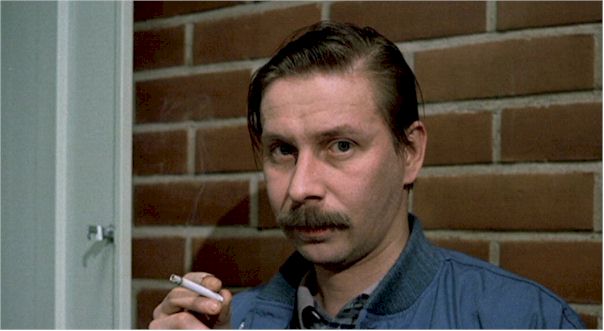
Jason Bateman (Arrested Development) plays chemist Joel Reynolds, founder and owner of Reynolds Extracts, and genuine lover of food flavoring. During work hours, Joel manages his plant and the colorful characters working there (including J.K. Simmons, Beth Grant (Mrs. Farmer from Donnie Darko), and a Matti Pellonpää-looking Mike Judge), and afterward hangs around with his wacky, drug-loving bartender friend Dean (a long-haired, bearded Ben Affleck in probably the only role I've actually enjoyed his performance). At home, Joel avoids his extra-neighborly next-door neighbor (David Koechner), and tries to figure out what to do with his sexless, though comfortable marriage to Suzie (Kristin Wiig).

Gotta see it to believe it.
These are captivating characters, replete with lovable little details (Joel's wife designs coupons for a living), and Mike Judge obviously put a laborious amount of time and effort into establishing exactly who these people are. I really enjoyed my stay in this cinematic world, but I just didn't quite buy the plot.
Mila Kunis plays a con-lady who drifts into town in an attempt to get in on some settlement cash after an employee (Clifton Collins Jr.) gets injured at the extract factory. Joel takes her charm for actual interest and with the help of some of Dean's drugs, messes up both his work and personal life. I really like Joel, and the fact that he really likes extract, and Kunis' performance is convincing and convivial, but I just don't think this is the story for Reynolds Extracts. No one really grows or changes as this movie progresses; it's as stagnant as Joel's sex-life. Kunis' Other character just doesn't feel appropriate for this meticulously-crafted world. We don't need her. The lives of these characters are already interesting enough.
As shown by his creative portfolio, Mike Judge knows about blue- and white-collar monotony, and what it's like to be part of a family (I've seen more King of the Hill than I'd like to admit). But the thing about movies is that they're only about an hour and a half long. Unlike television, in which characters can have seasons in which to grow and interact with themselves and with Others, movies only have that ninety minutes, so the plot has to be as good as the people in it. Extract is an enjoyable movie, a pleasant movie that I wish were a television pilot. I want to see more of these characters, but the scenario Mike Judge has presented them in is as vanilla as the extract Joel feels so passionately about. As a program on the tube de boob, without Kunis' character, Extract could be on par with some of my favorite television pilots, but with her, this movie feels like a mundane mid-season episode.
I know King of the Hill got canceled, and The Goode Family didn't really work out, but come back to teevee, Mike Judge! And this time maybe just leave the cartooning to Seth MacFarlane and try your hand at the live action stuff. You've obviously got a knack for it.
Jason Bateman (Arrested Development) plays chemist Joel Reynolds, founder and owner of Reynolds Extracts, and genuine lover of food flavoring. During work hours, Joel manages his plant and the colorful characters working there (including J.K. Simmons, Beth Grant (Mrs. Farmer from Donnie Darko), and a Matti Pellonpää-looking Mike Judge), and afterward hangs around with his wacky, drug-loving bartender friend Dean (a long-haired, bearded Ben Affleck in probably the only role I've actually enjoyed his performance). At home, Joel avoids his extra-neighborly next-door neighbor (David Koechner), and tries to figure out what to do with his sexless, though comfortable marriage to Suzie (Kristin Wiig).
Gotta see it to believe it.
These are captivating characters, replete with lovable little details (Joel's wife designs coupons for a living), and Mike Judge obviously put a laborious amount of time and effort into establishing exactly who these people are. I really enjoyed my stay in this cinematic world, but I just didn't quite buy the plot.
Mila Kunis plays a con-lady who drifts into town in an attempt to get in on some settlement cash after an employee (Clifton Collins Jr.) gets injured at the extract factory. Joel takes her charm for actual interest and with the help of some of Dean's drugs, messes up both his work and personal life. I really like Joel, and the fact that he really likes extract, and Kunis' performance is convincing and convivial, but I just don't think this is the story for Reynolds Extracts. No one really grows or changes as this movie progresses; it's as stagnant as Joel's sex-life. Kunis' Other character just doesn't feel appropriate for this meticulously-crafted world. We don't need her. The lives of these characters are already interesting enough.
As shown by his creative portfolio, Mike Judge knows about blue- and white-collar monotony, and what it's like to be part of a family (I've seen more King of the Hill than I'd like to admit). But the thing about movies is that they're only about an hour and a half long. Unlike television, in which characters can have seasons in which to grow and interact with themselves and with Others, movies only have that ninety minutes, so the plot has to be as good as the people in it. Extract is an enjoyable movie, a pleasant movie that I wish were a television pilot. I want to see more of these characters, but the scenario Mike Judge has presented them in is as vanilla as the extract Joel feels so passionately about. As a program on the tube de boob, without Kunis' character, Extract could be on par with some of my favorite television pilots, but with her, this movie feels like a mundane mid-season episode.
I know King of the Hill got canceled, and The Goode Family didn't really work out, but come back to teevee, Mike Judge! And this time maybe just leave the cartooning to Seth MacFarlane and try your hand at the live action stuff. You've obviously got a knack for it.
27 October 2010
REVIEW: United 93 -- like the LOST pilot, if it were composed entirely of unbearably tedious Jack and Kate scenes
I wrote this for a class, but then decided, hey! I wrote it! It's kind of short! It's kind of more an analysis than a review, but might as well post it here, too!
I've also added pictures.
Samuel Weber, in his article War, Terrorism, and Spectacle, writes that after the fall of the Twin Towers, US citizens had to be urged to "start spending again," to "get back to consuming," and in many ways this economic reinvigoration has emerged as a consumption of the tragedy itself. United 93 (Paul Greengrass, 2006) is one such consumer product. The film tells the story of United Flight 93, the fourth plane hijacked on September 11th, 2001, and the only one in which passengers were able to overpower the terrorists, and crash the plane far from the intended target.

Feel free to judge the entire film based on this one image.
United 93 is imbued with "authenticity"; it is "a terse realistic depiction of ordinary people in extraordinary circumstances" (Žižek). In Slavoj Žižek's response to the film, he describes it as trying to be "as anti-Hollywood as possible": there are "no special effects, no grandiloquent heroic gestures" and "no glamorous stars" (except the post-2006 breakouts Olivia Thirlby (Juno, The Wackness, Bored to Death) and Cheyenne "Shy Action" Jackson (30 Rock)). The cinematography consists mainly of shaky hand-held camera-work. The set designers explicitly strived to capture the "feel" of 2001, with characters' hand-held technology as the prime indicator—doomed passengers tell their families they love them on old clamshell mobiles and airphones; a girl listens to a CD player; a woman comments on a fellow passenger's boxy laptop—"Is that the latest model?" Locations are captioned ("Northeast Air Defense Command Center, Rome, New York") as though they really are the places for which they are standing in. When the hijackings do finally occur, observers meet them less with panic than disbelief. Those reporting the hijacks have to repeatedly quell incredulity and questions of "Is this a sim?" with affirmations that no, "This is real world." These skeptical characters ask questions the audience would, so as characters are reassured, so, too, are viewers, of United 93's realism.

Shy Anne ain't shy on talent.
Žižek writes that this "avoiding of sensationalism," and "sober and restrained style"—this "touch of authenticity" should make viewers suspicious, as to "what ideological purposes it serves." But even more so, this meticulous authenticity and choice to present the movie as in "real-time"(a minute of screen-time is a minute of the viewer's time; no fades or ellipses) just makes the film boring. Whereas in a movie concerning fictional events, long stretches of mundanity could provide tension for what is to come, in United 93, even the least news-houndish of viewers already know what is going to happen. Greengrass's little attempts at foreshadowing—choosing to show an interminably long emergency exit demonstration instead of utilizing the only truncating editing device available (cutting to the just-as-dull military and airline control rooms)—and his efforts at creating tension, with furtive looks exchanged between the soon-to-be-terrorists, are rendered futile. These hijackers are presented not as a part of some incomprehensibly large and shady terrorist organization, but as "desperate and deranged individuals" (Weber), the violence they commit becoming a private matter. Thus as the terrorists are the only well-defined and therefore identifiable characters, the viewer comes to root for them, if just so that something will happen. This seems the reverse of the intended effect of any so patriotic a film, but could possibly be deliberate, so as to make the viewer feel ashamed of such thoughts, and therefore guilt-trip them into higher degrees of nationalism. But Greengrass, director of two of the Bourne films, does not merit the assumption of such subtle emotional prowess.

We may hate A-rabs, but we ain't no fuckin' racists.
Instead, as Weber writes, this seemingly-authentic spectacle allows the viewers to "identify with the ostensibly invulnerable perspective of the camera." The unavoidable, unanswerable question of who is filming these presented-as-real events only augments the camera's invincible position. Unlike television news media, in which subjects are very aware of the camera's existence within their space, United 93 is presented as though there is no one there filming it, and the viewer is voyeuristically watching these events occur right as they happen. The spectacle, and thus the spectator, is "at once here and elsewhere" (Weber). Elsewhere on United 93 as it is hijacked, but simultaneously here, in a theatre seat, safe to go home once the credits role, without the fatal ends of the actual passengers (there were no survivors, as told by a title card). The spectator thus feels triumphant, immortal. They have gone back in time and taken part in destroying these terrorists, and due to the obsessive degree of realism, they feel as though they know how this really happened (though in reality, there are no survivors to corroborate Greengrass's version of the events), and thus feel that they could easily deal with a hijacking themselves. This terrorism does not seem so unexpected anymore. All someone needs to quash it is enough confident, middle-class white male patriots to figure out a plan; just some hot water, knives, and forks—the available supplies on an everyday commercial flight.

Even extreme realism can't stand in for the truth. Thanks, credits!
Žižek asserts that with United 93, this disaster "turned into a kind of triumph" sustains the United State's need for "major catastrophe in order to resuscitate the spirit of communal solidarity." But even more so, this film (perhaps groundlessly) reestablishes that superior feeling destroyed when the Twin Towers were; that American idea that "it can't happen here." United 93 provides the United States with a post-9/11 update of that wholesome, very American mantra: "It can happen here, but we now know how to deal with it." A sign shown in the opening scenes of the film reads, "God bless America." And God bless America indeed, for with the false sense of security perpetuated by such cultural products as United 93, if ever a very real, non-privatized terror strikes, we are going to need all the benedictions we can get.
Notes:
-I realize the whole "privatized" terrorism argument is not very well developed, but if you'd read the articles we had to read, it kind of would be.
-Before accusing me of being heartless, I actually did tear up during the bit when people were calling their families. Though I did laugh when Shy Anne was all, "You believe me, don't you, Mom?"
-I've never seen the Bourne films but I'm assuming they're not "imbued" with much emotional depth. Matt Damon's been funny in 30 Rock, though, so I guess that's good, right?
-I also stopped watching LOST mid-way through season two, when they killed everybody I liked, so maybe new, even less bearable characters are introduced and I should give Kack some slack. But since I couldn't even get through the first couple of seasons even with the promise of Jeremy Davies come season five, I'm not sure even J.J. Abrams could come up with something so torturous.
-Then again, I've watched both Alias and Felicity… young Jeffrey Jacob really does have a talent for making his viewers want to stab out their corneas.
-Dude, but in LOST that one guy had a gun! So they could have just shot the terr'rists. But also they were flying from Australia, and even the smallest, least-notorious terrorist organizations are not that desperate.
-Also, the terr'rists were the only vaguely attractive actors in U93, so maybe I was a bit biased in my response.
Articles:
Slavoj Žižek, Five Years After: the Fire in the Minds of Men
Samuel Weber, War, terrorism, and spectacle: On Towers and Caves
I've also added pictures.
Samuel Weber, in his article War, Terrorism, and Spectacle, writes that after the fall of the Twin Towers, US citizens had to be urged to "start spending again," to "get back to consuming," and in many ways this economic reinvigoration has emerged as a consumption of the tragedy itself. United 93 (Paul Greengrass, 2006) is one such consumer product. The film tells the story of United Flight 93, the fourth plane hijacked on September 11th, 2001, and the only one in which passengers were able to overpower the terrorists, and crash the plane far from the intended target.
Feel free to judge the entire film based on this one image.
United 93 is imbued with "authenticity"; it is "a terse realistic depiction of ordinary people in extraordinary circumstances" (Žižek). In Slavoj Žižek's response to the film, he describes it as trying to be "as anti-Hollywood as possible": there are "no special effects, no grandiloquent heroic gestures" and "no glamorous stars" (except the post-2006 breakouts Olivia Thirlby (Juno, The Wackness, Bored to Death) and Cheyenne "Shy Action" Jackson (30 Rock)). The cinematography consists mainly of shaky hand-held camera-work. The set designers explicitly strived to capture the "feel" of 2001, with characters' hand-held technology as the prime indicator—doomed passengers tell their families they love them on old clamshell mobiles and airphones; a girl listens to a CD player; a woman comments on a fellow passenger's boxy laptop—"Is that the latest model?" Locations are captioned ("Northeast Air Defense Command Center, Rome, New York") as though they really are the places for which they are standing in. When the hijackings do finally occur, observers meet them less with panic than disbelief. Those reporting the hijacks have to repeatedly quell incredulity and questions of "Is this a sim?" with affirmations that no, "This is real world." These skeptical characters ask questions the audience would, so as characters are reassured, so, too, are viewers, of United 93's realism.
Shy Anne ain't shy on talent.
Žižek writes that this "avoiding of sensationalism," and "sober and restrained style"—this "touch of authenticity" should make viewers suspicious, as to "what ideological purposes it serves." But even more so, this meticulous authenticity and choice to present the movie as in "real-time"(a minute of screen-time is a minute of the viewer's time; no fades or ellipses) just makes the film boring. Whereas in a movie concerning fictional events, long stretches of mundanity could provide tension for what is to come, in United 93, even the least news-houndish of viewers already know what is going to happen. Greengrass's little attempts at foreshadowing—choosing to show an interminably long emergency exit demonstration instead of utilizing the only truncating editing device available (cutting to the just-as-dull military and airline control rooms)—and his efforts at creating tension, with furtive looks exchanged between the soon-to-be-terrorists, are rendered futile. These hijackers are presented not as a part of some incomprehensibly large and shady terrorist organization, but as "desperate and deranged individuals" (Weber), the violence they commit becoming a private matter. Thus as the terrorists are the only well-defined and therefore identifiable characters, the viewer comes to root for them, if just so that something will happen. This seems the reverse of the intended effect of any so patriotic a film, but could possibly be deliberate, so as to make the viewer feel ashamed of such thoughts, and therefore guilt-trip them into higher degrees of nationalism. But Greengrass, director of two of the Bourne films, does not merit the assumption of such subtle emotional prowess.
We may hate A-rabs, but we ain't no fuckin' racists.
Instead, as Weber writes, this seemingly-authentic spectacle allows the viewers to "identify with the ostensibly invulnerable perspective of the camera." The unavoidable, unanswerable question of who is filming these presented-as-real events only augments the camera's invincible position. Unlike television news media, in which subjects are very aware of the camera's existence within their space, United 93 is presented as though there is no one there filming it, and the viewer is voyeuristically watching these events occur right as they happen. The spectacle, and thus the spectator, is "at once here and elsewhere" (Weber). Elsewhere on United 93 as it is hijacked, but simultaneously here, in a theatre seat, safe to go home once the credits role, without the fatal ends of the actual passengers (there were no survivors, as told by a title card). The spectator thus feels triumphant, immortal. They have gone back in time and taken part in destroying these terrorists, and due to the obsessive degree of realism, they feel as though they know how this really happened (though in reality, there are no survivors to corroborate Greengrass's version of the events), and thus feel that they could easily deal with a hijacking themselves. This terrorism does not seem so unexpected anymore. All someone needs to quash it is enough confident, middle-class white male patriots to figure out a plan; just some hot water, knives, and forks—the available supplies on an everyday commercial flight.
Even extreme realism can't stand in for the truth. Thanks, credits!
Žižek asserts that with United 93, this disaster "turned into a kind of triumph" sustains the United State's need for "major catastrophe in order to resuscitate the spirit of communal solidarity." But even more so, this film (perhaps groundlessly) reestablishes that superior feeling destroyed when the Twin Towers were; that American idea that "it can't happen here." United 93 provides the United States with a post-9/11 update of that wholesome, very American mantra: "It can happen here, but we now know how to deal with it." A sign shown in the opening scenes of the film reads, "God bless America." And God bless America indeed, for with the false sense of security perpetuated by such cultural products as United 93, if ever a very real, non-privatized terror strikes, we are going to need all the benedictions we can get.
Notes:
-I realize the whole "privatized" terrorism argument is not very well developed, but if you'd read the articles we had to read, it kind of would be.
-Before accusing me of being heartless, I actually did tear up during the bit when people were calling their families. Though I did laugh when Shy Anne was all, "You believe me, don't you, Mom?"
-I've never seen the Bourne films but I'm assuming they're not "imbued" with much emotional depth. Matt Damon's been funny in 30 Rock, though, so I guess that's good, right?
-I also stopped watching LOST mid-way through season two, when they killed everybody I liked, so maybe new, even less bearable characters are introduced and I should give Kack some slack. But since I couldn't even get through the first couple of seasons even with the promise of Jeremy Davies come season five, I'm not sure even J.J. Abrams could come up with something so torturous.
-Then again, I've watched both Alias and Felicity… young Jeffrey Jacob really does have a talent for making his viewers want to stab out their corneas.
-Dude, but in LOST that one guy had a gun! So they could have just shot the terr'rists. But also they were flying from Australia, and even the smallest, least-notorious terrorist organizations are not that desperate.
-Also, the terr'rists were the only vaguely attractive actors in U93, so maybe I was a bit biased in my response.
Articles:
Slavoj Žižek, Five Years After: the Fire in the Minds of Men
Samuel Weber, War, terrorism, and spectacle: On Towers and Caves
20 September 2010
REVIEW: How I Met Your Mother, S06E01
The first episode of the sixth season of How I Met Your Mother perfectly sums up the boring predictability of the last two seasons (end already!). It takes place almost entirely in one scene at the bar, in one booth, with some lackluster "riddles" that Barney tells as the "highlights," joke-wise.
Basically:
Barney bemoans summer's end, then oggles some girls again.
Robin looks gross eating cheetos, then "hot," titillating Barney's wein-o.
Ted does not meet the mother.
Lily and Marshall love each other... awwwwwww.
(How I miss the Proclaimers references!)
Basically:
Barney bemoans summer's end, then oggles some girls again.
Robin looks gross eating cheetos, then "hot," titillating Barney's wein-o.
Ted does not meet the mother.
Lily and Marshall love each other... awwwwwww.
(How I miss the Proclaimers references!)
03 September 2010
THE LITTLE THINGS: The Increasingly Poor Decisions of Todd Margaret, pilot

The above background poster generated one of the few laughs I had while watching the pilot of The Increasingly Poor Decisions of Todd Margaret, David Cross' new series, slated to premiere October 1st on IFC.
The show concerns the eponymous Todd Margaret, an incompetent, somewhat dimwitted American. While temping at a sales company, Todd stumbles into a job managing a new British division selling the above-pictured energy drinks (because apparently American business executives think that British people love guzzling down thunder and muscles). Once in England, Todd discovers what pounds are, doesn't understand how anything else works, and kind of makes friends with an empathetic cafe owner/Catherine Keener act-alike (Sharon Horgan). Todd's one employee is an assholey British guy (Russel Tovey), who I guess got recast for the actual series, hopefully by someone less assholey. For star-power, Will Arnett plays a douchebaggy GOB/Devon Banks crossover, Kristen Schaal for some reason appears in the background of one shot, and Amber Tamblyn guests because, y'know, she's fucking David Cross. And though this pilot was directed by the Russo brothers (those masterful réalisateurs of some of my favorite Arrested Development episodes) and co-written by Cross and the British comedian Shaun Pye, watching Todd Margaret is not an enjoyable experience.
For one thing, Todd is just too stupid and ignorant, and not in the "likable dunce" or "naive foreigner" way that works for shows like The Flight of the Conchords. No, Todd is one of those characters you don't exactly want to see fail, you just... don't want to see. And the other characters are really not any better. Todd Margaret is populated by the kinds of British people you really only ever see in US portrayals of England. Even with a Brit on the writing staff, and the heritage of the cast (though even that is questionable, what with their Rich Fulcher-like Oxford accents), this representation of England called to mind terrible movies my sister likes to watch -- the Amanda Byne's vehicle What a Girl Wants, the Emma Roberts flick Wild Child (in which British people somehow don't know what cellphones are). Everyone in this England is either trying to make Americans look like dicks, or is a little bit slow, and a little bit too fond of their pints and tea. And okay, okay, I know, I'm not British, nor have I ever been to England, but I'd say I've watched quite enough hours of UK TV to compensate. Also, this show just really isn't funny.
So... I guess IFC thought the pilot was good enough for a greenlighting, but I'm not sure I could stand to watch another episode of Todd Margaret's antics -- let alone the six of the first season -- even for Mr. David Cross. You can watch the pilot and make your own call, but I'd advise just laughing at the above screencap, and then reassuring yourself of your love for England with a little bit of Boosh while eating some Spaghetti Hoops.
17 April 2010
WATCH THIS: Party Down
Remember Party Down?
No?
Oh, you must. It's that fantastically funny show about wanna-be-actors-turned-caterers that premiered last year... it was created by, among others, Paul Rudd and Rob Thomas (the other one, the Veronica Mars one) and stars Adam Scott (the male nurse in Knocked Up... you've probably seen him in something), Ken Marino (The State!), Lizzy Caplan (Janis Ian from Mean Girls, Sara from Freaks and Geeks), Martin Starr (Bill from Freaks and Geeks), Ryan Hansen (Dick Casablancas from Veronica Mars), and Jane Lynch.

Just look at this compelling picture of beloved actors you probably recognize.
Yeah... she is on Glee now, and yeah, she is funny on it, I guess... that's (one of the reasons) why I hate Glee so much, cos it took her away from Party Down...
No, no, Party Down wasn't canceled. The second season premiers on April 23rd! And you totally must remember it! It's so good! The writing is consistently hil-ar-ious (and wonderfully wry), there's continuity and story-arcs between episodes, the characters are relatable for anyone who's ever thought they could succeed in the arts (and of course learned they couldn't) or anyone who's ever had to have a shitty job just to get by... It's the best! And it has lots of amazing guest stars, too... so many people from Veronica Mars, Freaks and Geeks, and The State... Are you sure you've never heard anything about it?
No? Well... watch this clip:
See! It's so good! You should totally start watching it. Each episode takes place during the course of a catering gig... kind of like The Office in that you really only see these characters in the context of their workplace (and in uniform!), but you still really get to know them. Hurry and watch so you have time to catch up before the second season.
Oh, it airs Fridays at 10 pm on Starz.
Yeah, I don't get Starz either.
No?
Oh, you must. It's that fantastically funny show about wanna-be-actors-turned-caterers that premiered last year... it was created by, among others, Paul Rudd and Rob Thomas (the other one, the Veronica Mars one) and stars Adam Scott (the male nurse in Knocked Up... you've probably seen him in something), Ken Marino (The State!), Lizzy Caplan (Janis Ian from Mean Girls, Sara from Freaks and Geeks), Martin Starr (Bill from Freaks and Geeks), Ryan Hansen (Dick Casablancas from Veronica Mars), and Jane Lynch.
Just look at this compelling picture of beloved actors you probably recognize.
Yeah... she is on Glee now, and yeah, she is funny on it, I guess... that's (one of the reasons) why I hate Glee so much, cos it took her away from Party Down...
No, no, Party Down wasn't canceled. The second season premiers on April 23rd! And you totally must remember it! It's so good! The writing is consistently hil-ar-ious (and wonderfully wry), there's continuity and story-arcs between episodes, the characters are relatable for anyone who's ever thought they could succeed in the arts (and of course learned they couldn't) or anyone who's ever had to have a shitty job just to get by... It's the best! And it has lots of amazing guest stars, too... so many people from Veronica Mars, Freaks and Geeks, and The State... Are you sure you've never heard anything about it?
No? Well... watch this clip:
See! It's so good! You should totally start watching it. Each episode takes place during the course of a catering gig... kind of like The Office in that you really only see these characters in the context of their workplace (and in uniform!), but you still really get to know them. Hurry and watch so you have time to catch up before the second season.
Oh, it airs Fridays at 10 pm on Starz.
Yeah, I don't get Starz either.
03 April 2010
WATCH THIS: The Life & Times of Tim
The Life & Times of Tim, created by Steve Dildarian, is another show about a twenty-something New Yorker working at a monolithic corporation and just trying to get by without totally embarrassing himself.
Except this show is totally hilarious.
Tim is sort of like an animated version of those The Most Awkward Boy in the World comedy sketches (starring Zach Woods, now of The Office fame)... somehow, no matter what Tim does (or doesn't do), it's gonna get pretty uncomfortable. And rip-roaringly funny. Just in the first season Tim somehow gets cornered into fighting an old man, and taking his boss's daughter to her senior prom.
WATCH THIS SHOW.
The animation is a little... simple, like something you might come across on Newgrounds, but don't let that dissuade you. This is a cartoon in which the characters wear different outfits (but still have a consistent wardrobe/style), and one that has many little background details never mentioned, but that are sincerely pause-worthy:


There is also continuity between episodes, recurring characters, notable guest stars (Tony Hale, Trevor Moore, Lizzy Caplan, Cheri Oteri, Jeff Garlin, Bob Saget...), references to Wes Anderson and Felicity, and many, many hilarious jokes.
Tim could be criticized for its use of vulgar situations (and language), but none of it is used gratuitously, or without creativity and originality. Vulgar? Yes. Tasteless, lewd, or uncouth? Hell no. A prime example is an alcoholic priest, a recurring character, and in the age of parish sex scandals, a skewed version of a new kind of archetype. Yet Tim does not use this character as a chance for a cheap shot at religious institutions. No, the priest's "wild" antics instead just lead to more opportunities for Tim to have to deal with awkwardness and embarrassment - what the show is about.
Watch The Life & Times of Tim or else live with the knowledge that you're missing out on something wonderful.
Each thirty-minute episode consists of two fifteen-minute segments.
The Life & Times of Tim airs on HBO at 9:30 pm Fridays.
It is currently half-way through its second season, which has a snazzy new opening-sequence, but is not lacking in any of the goodness mentioned above.
Except this show is totally hilarious.
Tim is sort of like an animated version of those The Most Awkward Boy in the World comedy sketches (starring Zach Woods, now of The Office fame)... somehow, no matter what Tim does (or doesn't do), it's gonna get pretty uncomfortable. And rip-roaringly funny. Just in the first season Tim somehow gets cornered into fighting an old man, and taking his boss's daughter to her senior prom.
WATCH THIS SHOW.
The animation is a little... simple, like something you might come across on Newgrounds, but don't let that dissuade you. This is a cartoon in which the characters wear different outfits (but still have a consistent wardrobe/style), and one that has many little background details never mentioned, but that are sincerely pause-worthy:
There is also continuity between episodes, recurring characters, notable guest stars (Tony Hale, Trevor Moore, Lizzy Caplan, Cheri Oteri, Jeff Garlin, Bob Saget...), references to Wes Anderson and Felicity, and many, many hilarious jokes.
Tim could be criticized for its use of vulgar situations (and language), but none of it is used gratuitously, or without creativity and originality. Vulgar? Yes. Tasteless, lewd, or uncouth? Hell no. A prime example is an alcoholic priest, a recurring character, and in the age of parish sex scandals, a skewed version of a new kind of archetype. Yet Tim does not use this character as a chance for a cheap shot at religious institutions. No, the priest's "wild" antics instead just lead to more opportunities for Tim to have to deal with awkwardness and embarrassment - what the show is about.
Watch The Life & Times of Tim or else live with the knowledge that you're missing out on something wonderful.
Each thirty-minute episode consists of two fifteen-minute segments.
The Life & Times of Tim airs on HBO at 9:30 pm Fridays.
It is currently half-way through its second season, which has a snazzy new opening-sequence, but is not lacking in any of the goodness mentioned above.
24 March 2010
AMAZON REVIEW: Moby-Dick; or, The Whale (Great Classics for Children) (Hardcover)
my step-dad told me I'd like it; gave me his

Moby Dick is quite a mouthful. Of a book.
But the cathartic bliss and fulfillment once you finish is well worth the long, hard wait.
tags: cathartic, long, hard, mouthful
Moby Dick is quite a mouthful. Of a book.
But the cathartic bliss and fulfillment once you finish is well worth the long, hard wait.
tags: cathartic, long, hard, mouthful
05 February 2010
REVIEW: Full Metal Jacket -- I freakin' love this movie.
Yeah, yeah, I know -- this is the sort of movie you're supposed to watch in eighth grade and then fall madly in love with it. And yeah, yeah, if I had been enough of a cinephile to have seen it the first time when I was fourteen, then I probably would have watched it about forty subsequent times that year.
But I didn't. I'm lame, and only just watched the film for the first time recently, but I freakin' love Full Metal Jacket. I know, I know, it's Kubrick, it's so cliché to praise his work, but Full Metal Jacket is part self-reflexive Vietnam flick, part chillingly stark military-school fare, and 100% kick-ass. There's a reason why it's in the IMDb top 250.

Sure the "duality" of this film does not "gel" completely. There's potential for a ten-page analytical essay on that issue. We go from bleak, suicide-inducing cruelty in suburban America, to the wisecracking adventures of some ragtag marines, shooting VCs and calling each other "turd." If you like jokes making fun of racists that are also, you know, kind of racist, then you'll like this. But that's what makes Full Metal Jacket so awesome -- it's a war film that makes fun of war films. And all kinds of war films -- the ones about hard life at boot camp, those covering tough times in combat, and a little bit, even, of those stories of that supposed veteran sagacity that comes with having experienced battle, through Joker's sporadic, retrospective voice-over. There's even a whole section devoted to camera crews interviewing soldiers and "shooting" some action. Full Metal Jacket is a war movie that is in no way trying to fool you into thinking it isn't one. And come on, guys... it's Kubrick, and it's from 1987. If you haven't seen it yet, then get your ass in gear, man.
But I didn't. I'm lame, and only just watched the film for the first time recently, but I freakin' love Full Metal Jacket. I know, I know, it's Kubrick, it's so cliché to praise his work, but Full Metal Jacket is part self-reflexive Vietnam flick, part chillingly stark military-school fare, and 100% kick-ass. There's a reason why it's in the IMDb top 250.
Sure the "duality" of this film does not "gel" completely. There's potential for a ten-page analytical essay on that issue. We go from bleak, suicide-inducing cruelty in suburban America, to the wisecracking adventures of some ragtag marines, shooting VCs and calling each other "turd." If you like jokes making fun of racists that are also, you know, kind of racist, then you'll like this. But that's what makes Full Metal Jacket so awesome -- it's a war film that makes fun of war films. And all kinds of war films -- the ones about hard life at boot camp, those covering tough times in combat, and a little bit, even, of those stories of that supposed veteran sagacity that comes with having experienced battle, through Joker's sporadic, retrospective voice-over. There's even a whole section devoted to camera crews interviewing soldiers and "shooting" some action. Full Metal Jacket is a war movie that is in no way trying to fool you into thinking it isn't one. And come on, guys... it's Kubrick, and it's from 1987. If you haven't seen it yet, then get your ass in gear, man.
Subscribe to:
Posts (Atom)